On a quiet night bus, we cross the border from Ecuador to Peru. The bus isn’t too crowded, and I share two seats with two small cockroaches, yuck! But that’s also part of travelling. Around 4 a.m., an Ecuadorian girl and I are dropped off on the side of the road in the coastal village of Mancora. A swarm of tuk-tuk drivers rushes towards us and, one dollar per person later, we are standing in front of our hostel. It is supposedly the only place in Mancora where there is something to do in the evening. I go to sleep around 5 a.m. to the sound of roaring waves
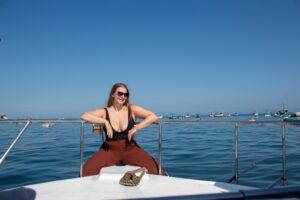
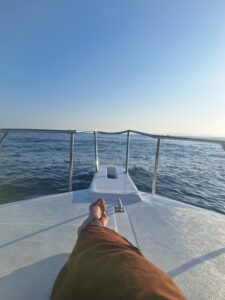
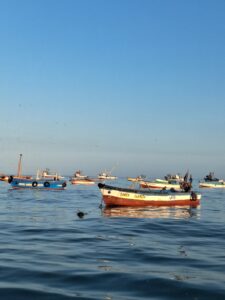
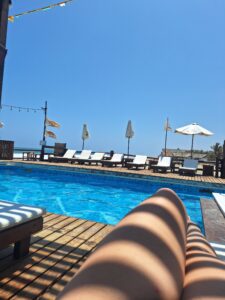
When I wake up and go to the swimming pool, I notice a few things: it’s quite expensive here, and outside the resort, quite ugly. I’m surprised by the coastline; barren, orange, with unfinished buildings and rubbish. Not what I’m used to after the beautiful Brazilian beaches! I decide to go into town with Maribel, the Ecuadorian, and book a bus for tomorrow evening. I don’t want to stay in such an ugly place for more than two days, I think! Too quick to judge, because the next evening I regret leaving already… I made some friends at the hostel, including two very friendly Israelis. Before this, I was a bit wary of Israelis travelling, because I had had a few bad experiences in the past. But you can’t tar everyone with the same brush. We eat at a delicious local sushi place and meet again the next day at the swimming pool. In the morning, I go on a whale watching tour, where you go out on a boat on the open sea in search of whales. We see their backs and tails, but unfortunately no jumps out of the water. A few weeks earlier, I had met two German girls who had also been on a tour and had seen the whales jumping. Apparently, it was so impressive that one of them got a whale tattoo afterwards. Unfortunately for me, no whale tattoo yet. I spend the rest of the day in and around the water before braving the next night bus. I make a deal with myself: at the next destination I want to spend at least four nights in a row lying down, and not with my new cockroach friends on a night bus.
I meet another Israeli girl and we take an 18.5-hour bus ride to Huaraz together. It was sold to us as a direct bus, but the competition warned us that the ladies were not very truthful. In Chimbote, we change buses around 6 a.m. The Peruvian landscape is desert-like, which I am not used to. Until now, I had mainly seen forests and greenery. Somehow, I had expected Peru and Ecuador to look almost the same, but nothing could be further from the truth. I thought it was just Mancora, but it is becoming increasingly clear that it is not the coastal village, but simply the landscape. We arrive in Huaraz in the afternoon, the place to be for high-altitude hikes in Peru with seemingly beautiful views.
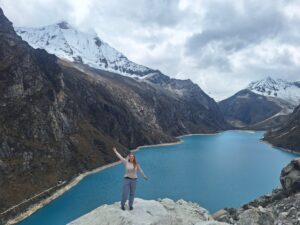
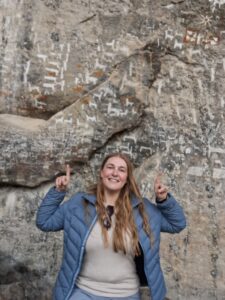
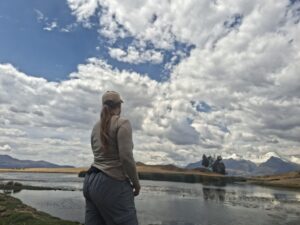
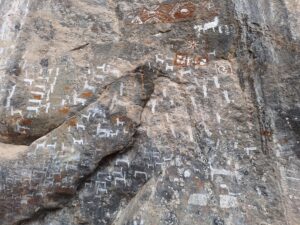
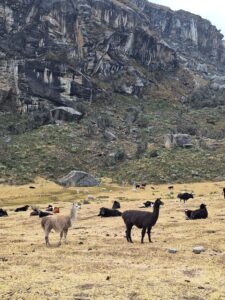
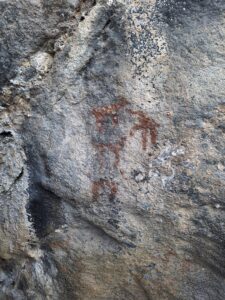
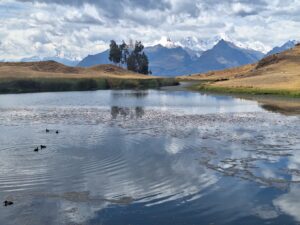
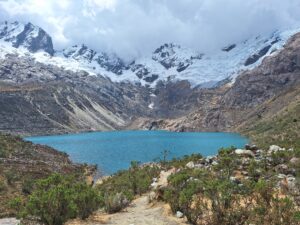
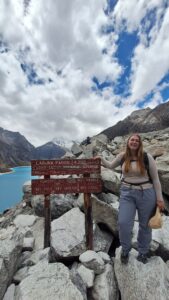
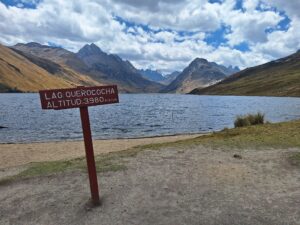
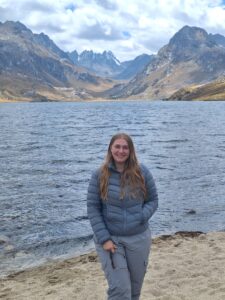
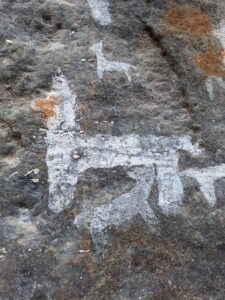
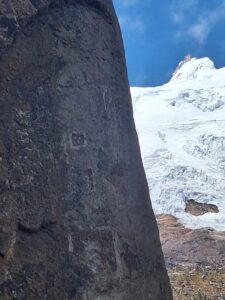
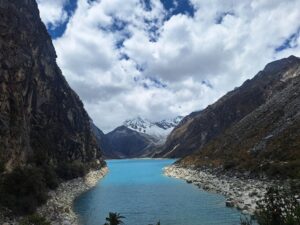
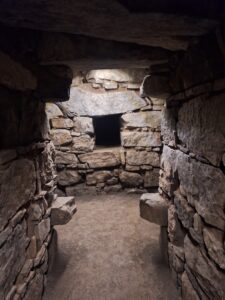
In the following days, I go on several hikes with varying degrees of success. The first hike is at 4,200 metres. Although I manage it, after ten minutes at the top I start to get a headache. I take a pill for altitude sickness, but it’s already too late. The rest of the day I feel sick from the headache. The next morning, I wake up with tingling in my fingertips. I take a tour to some mountain lakes at 4500 metres, but I don’t make it to the second one. Halfway up the mountain you have to cross to reach the second lake, my vision starts to spin and become blurry. I immediately descend and walk towards some 2200-year-old murals. These are beautiful to see and make me so happy that I forget my altitude sickness for a moment. During the rest of my time in Huaraz, I write, call my parents, visit museums and take a final walk a little later, at 3750 metres. Fortunately, I make it and it boosts my morale. Maybe I can get used to the altitude if I just give myself a little more time?
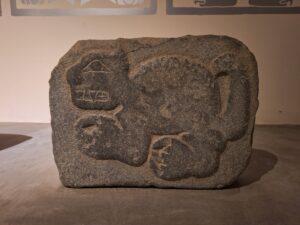
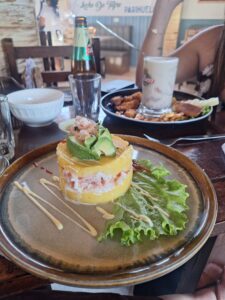
I take a luxurious night bus to Lima; the first row on the top floor, without neighbours (an individual bed), with curtains, free tea and snacks. Lima makes a good impression on me, and I use the three days to do all kinds of things that are best done in a city. Museums, walking tours, gastronomy, sending a parcel to Peer, doing laundry, and meeting a friend I made in Rio. How nice and nostalgic to meet travel friends again at other destinations on your journey! So far, Rio and the people I met there still hold a special place in my heart. I think seeing Rodrigo and talking to him about his city made the experience even more enjoyable. He told me about all the traffic jams and busy traffic (terrible! I almost missed my bus because of it), the inequality between people, his life and work, …
Lima is a city with beautiful old architecture, colonial buildings, artistic murals, and beautiful apartment buildings overlooking the sea. It is rough, and there is a cliff that plunges down just off the coast. Although I didn’t do much in Lima, I found it a very nice place and I’m already thinking about going back there if Cuzco disappoints me. What can I say, I’m a city girl!
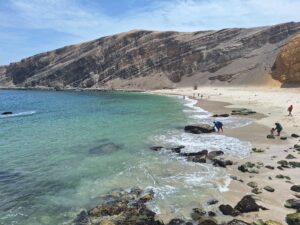
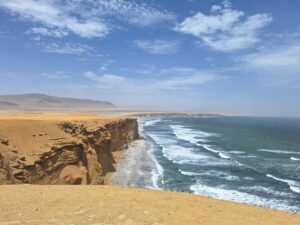
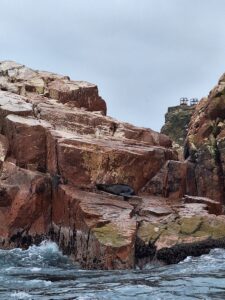
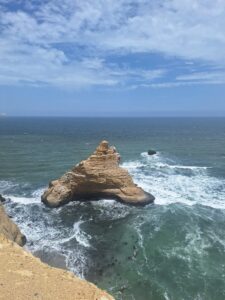
As I write this blog post, I am on my way to a small village called Paracas, where there is a national park with sea lions and an iconic view for sunsets. The road there is the Pan-American Highway, which I have been following southwards since Quito. I look out of the window and see sand, sand, sand.
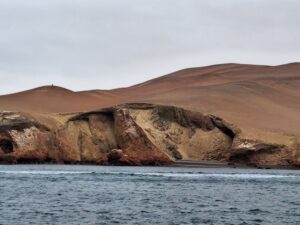
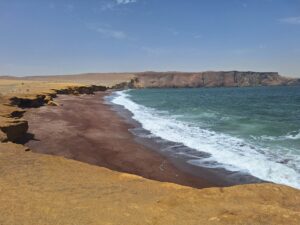
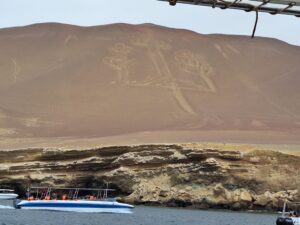
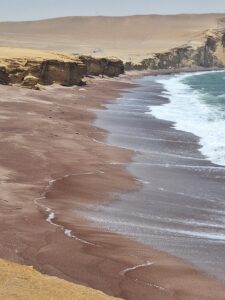
In Paracas, I visit the national park, where large lines have been drawn in the sand by an ancient civilisation, just like in Nazca! The lines are on the north side of a dune, as in Paracas the wind always comes from the south. That’s why the drawing never blows away, according to the guide. She also told me that the Atacama Desert extends to the north of Peru, which explains my confusion at seeing sand everywhere. I thought Peru would be green, like Ecuador and Colombia, but it’s more yellow and orange.
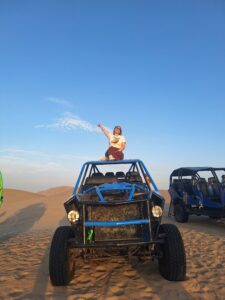
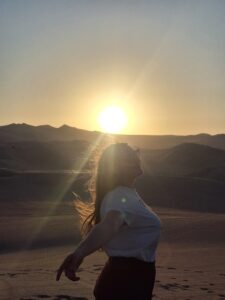
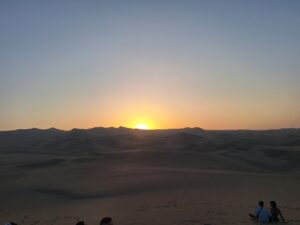
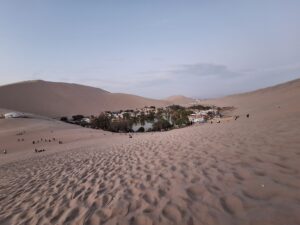
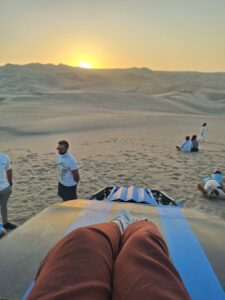
From Paracas, I make my way to Huacachina, a small oasis in the sand dunes next to the city of Ica. Everyone goes to Huacachina for sandboarding, sand buggying and other sand sports. I leave my hostel just before five in the evening to buy a bag of crisps when I am stopped by a salesman. He asks me if I want to go on a sand buggy tour right now (yes, right now!). He offers me 50, I agree to 40. The same tour cost 110 soles at the hostel, so for almost a third of the price, I think I’ve got a good deal. The buggies drive like mad across the sand dunes, fuelled by diesel and nitro for extra horsepower. We are strapped in with safety harnesses, but when the buggy drives over a steep edge with a metre-deep plunge, I say a quick prayer. The Colombian woman next to me suddenly becomes religious too. We watch the sunset from our buggy and go sandboarding or “bodyboarding” in the sand, which is great fun! The next day, I make a phone call home and in the evening I take another night bus to Arequipa, back into the Andes.