Bolivia is a strange country, full of superstitions, rituals and a bloody history. My trip to Bolivia is one of the longest so far, spending more than 15 hours on the same bus, in the same seat. That’s why I treated myself to a 180-degree suite, hoping to get some more sleep. At the border control, everything is slow and we have to have all our luggage checked at once. When the bus leaves on the Bolivian side, only half of the seats are filled. I walk up to the bus driver and ask if we are missing any passengers, because the girl who was sitting next to me, for example, has suddenly disappeared. He says she was not allowed to cross the border. This made me wonder whether border control is so strict in Bolivia, or whether the people on the bus were trying to cross the border for less honest reasons. I enjoy my suddenly regained space and take up two lovely 180-degree seats. I don’t mind he journey taking a little longer like this!
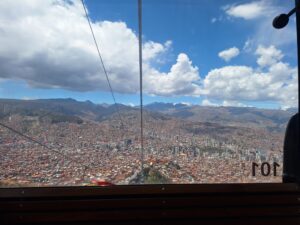
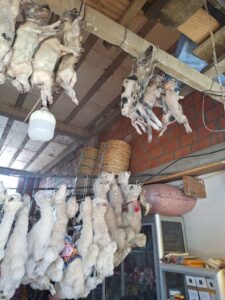
When we drive into La Paz, we descend from the higher mountains into the valley. The city at this altitude is aptly named El Alto, and has some unusual architecture. Just like in Peru, the houses here are unfinished. Everything is orange brick with deep grooves and corrugated iron roofs. Occasionally, there is a façade reminiscent of the Transformers franchise. They could have chosen anything, and this is the choice they made. It contrasts sharply with the different sides of La Paz that I discover in the days that follow. The façades of El Alto feel modern, with an eye to the future. At the same time, La Paz is steeped in superstition and has a perspective that is more focused on the past. Rituals and witchcraft are normal here, and in addition to the usual offerings to Pachamama (some sweets, coca leaves, etc., usually placed in a niche in a building), you will also find larger rituals, where all the ingredients are burned on the side of the street in large pans over wood fires. The small charcoal remains fly around you everywhere. They believe that if you burn the offering, Pachamama will smell it and grant your wish.
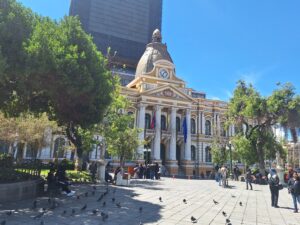
Apart from alcohol and alcoholism (a major problem in Bolivia), La Paz is best known for another substance: cocaine. In the past, you could take tours of San Pedro prison, where you could buy pure cocaine for a few euros. The prison is a kind of city within a city, with its own rules and systems. The prison guards only patrol the outside of the building. The prison is known as one of the places where the white powder is produced. This still happens, but the tours were stopped after too much publicity. Now you can bribe the prison guards to get in, but the amount you have to pay to get out again is a lot higher!
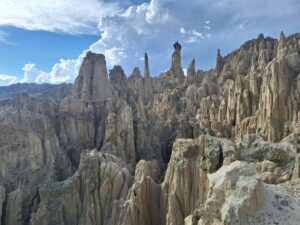
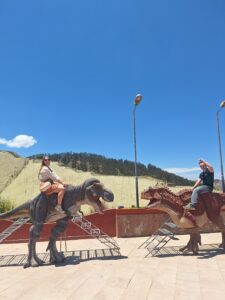
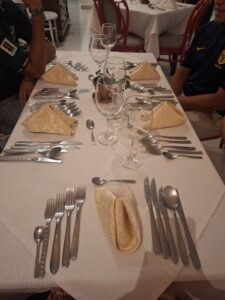
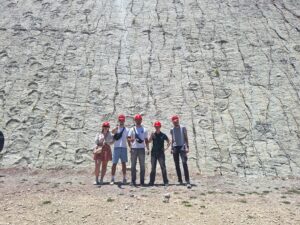
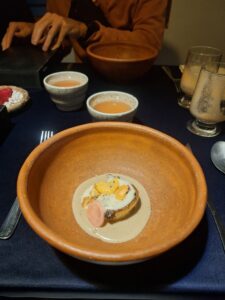
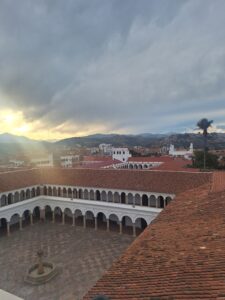
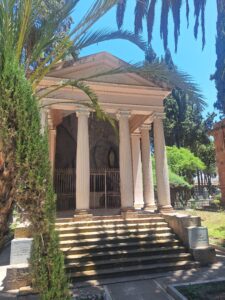
After five days of crazy stories in La Paz, I take a night bus to Sucre. I meet a Belgian and a Frenchman there and we hit it off immediately. We spend two days together, which mainly consist of lots of delicious food. I enjoy the fact that there are few cultural differences between us and that it feels so easy to hang out together. After sadly saying goodbye to my new friends, on day three I join Dutch and Norwegian travellers to visit the dinosaur footprints that can be admired close to Sucre. It’s a funny outing: the park is quite kitsch, full of plastic dinosaurs, but the footprints are real. After four days in Sucre, I’m not sure what else to do, so I decide to take a bus to Uyuni to do a tour of the salt flats.

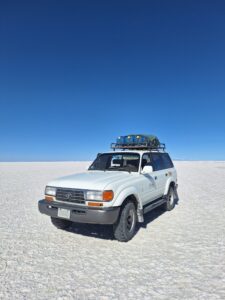
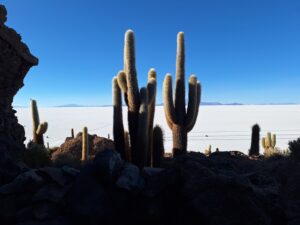
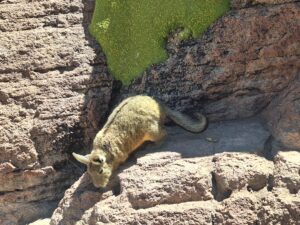
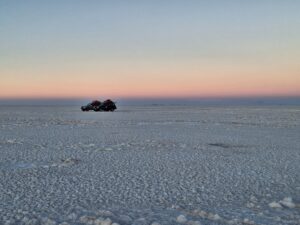
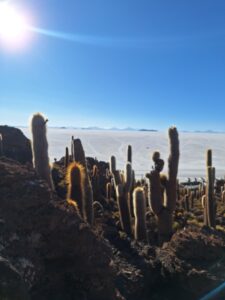
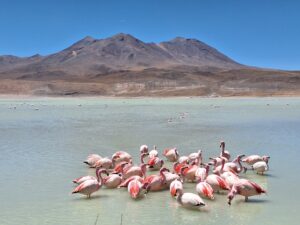
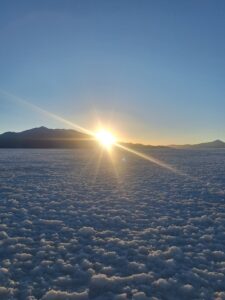
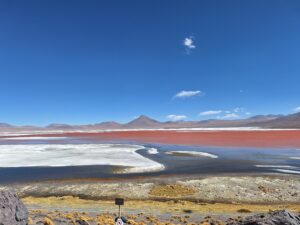
The tour lasted three days and consisted mainly of hours of driving through salt flats and deserts in a jeep. We stopped occasionally to take photos and went for a walk on a cactus island. The first day of the three was definitely the best, and if I had to do the tour again, I would probably only do a one-day tour and spend more time in the rest of Bolivia. Bolivia charmed me. It was a fun and inexpensive country with a very social backpacker scene. I hope Chile has more of this in store!